Baptiste Emil Søiland
Eco travel
Travel sustainabily
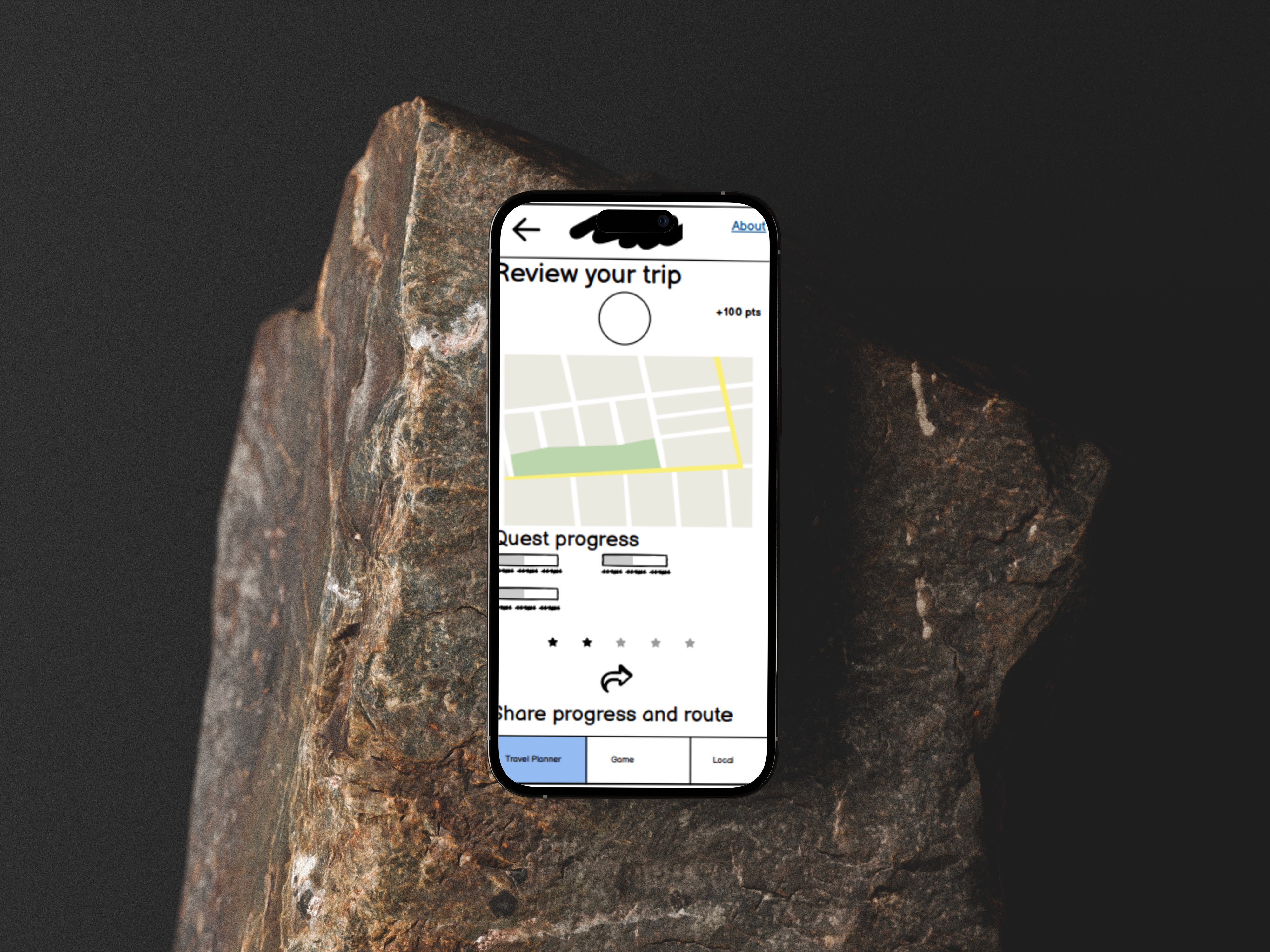
With the global urgency around climate change and sustainability, travelers are increasingly looking for ways to minimize their carbon footprint. Yet, planning sustainable travel is often fragmented, confusing, and time-consuming.
Type
Student project
Duration
2 months
Roles
Research, user testing, UI design
The goal
Our project set out to solve this by creating a user-friendly digital platform that helps users plan trips that are both enjoyable and environmentally responsible.
The process
Research goals
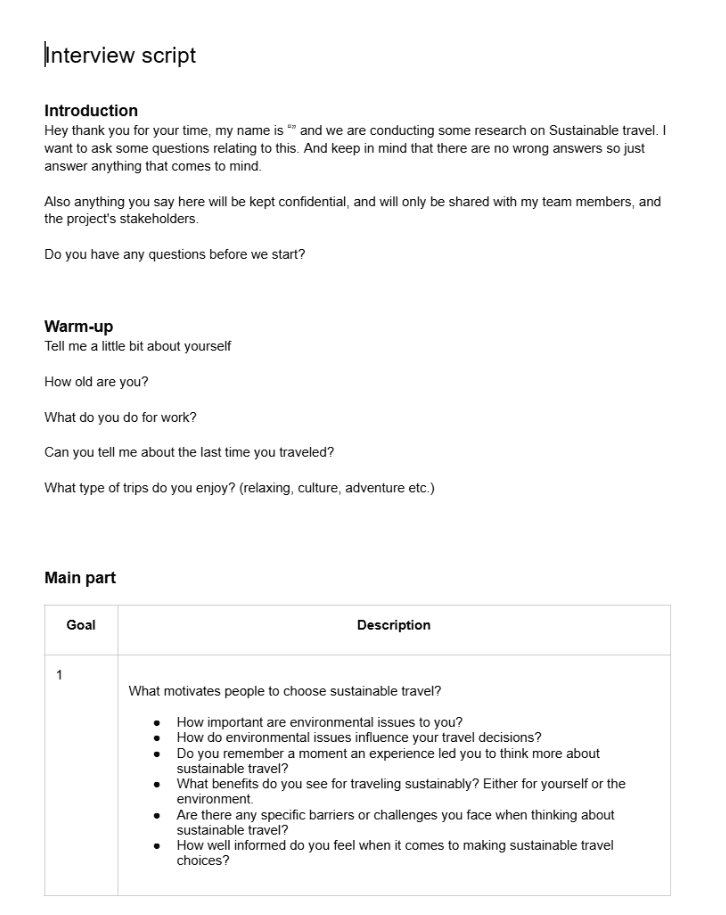
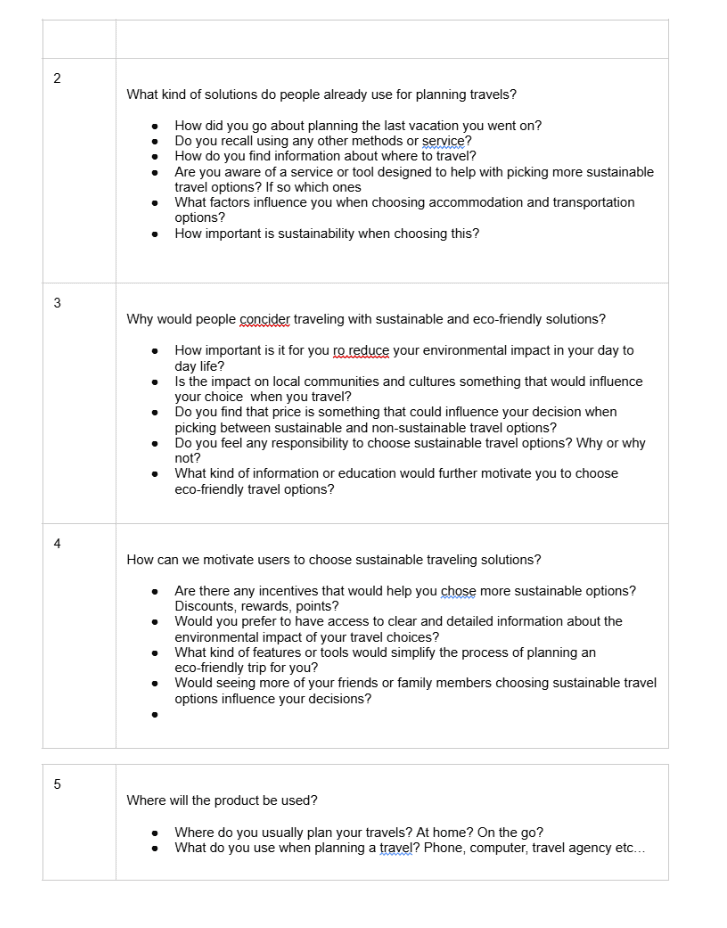
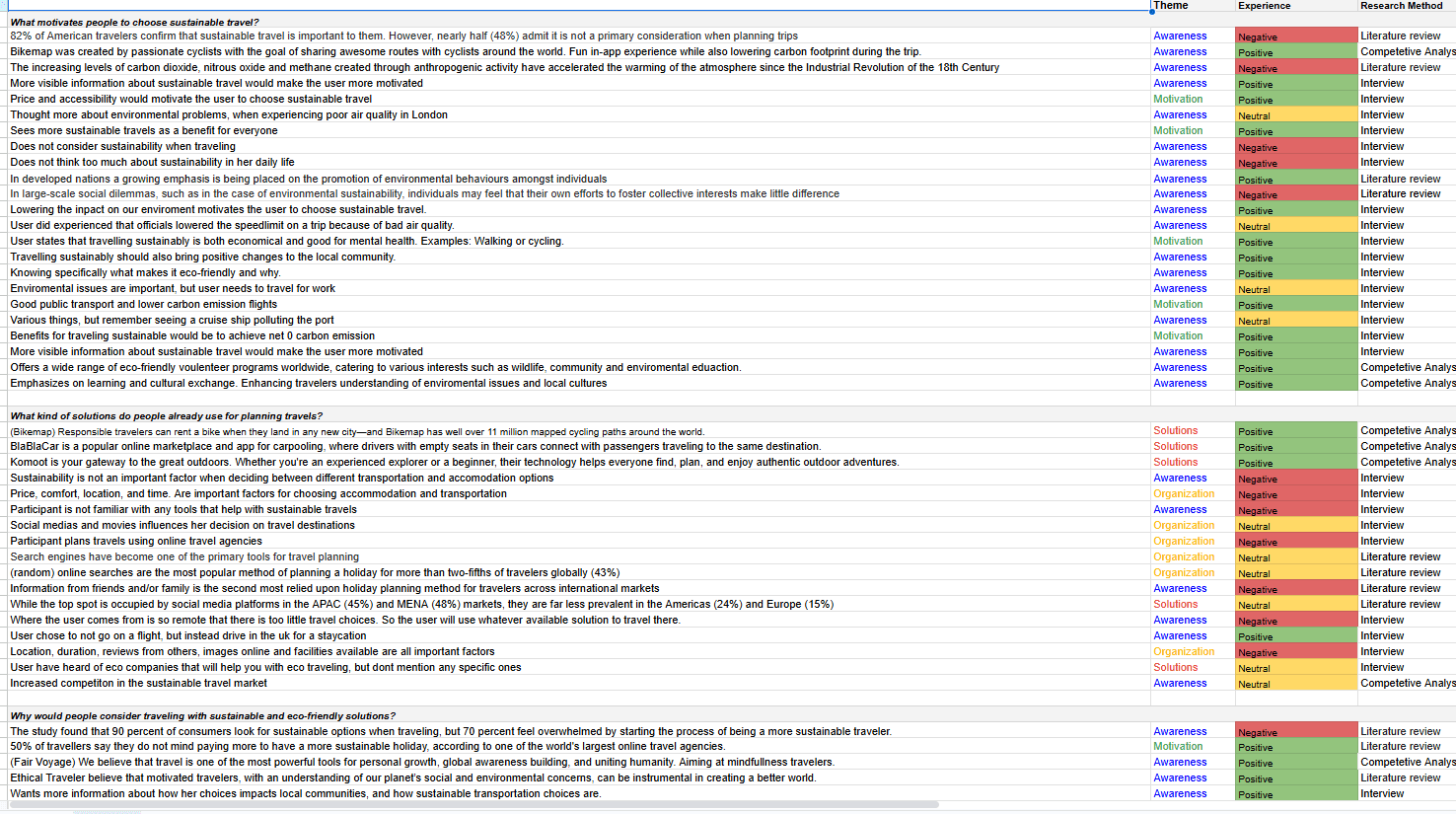
To ensure we researched effectively, and to stay focused on our users pain points, our research was centered around these goals.
What motivates people to choose sustainable travel?
What kind of solutions do people already use for planning travels?
Why would people consider traveling with sustainable and eco-friendly solutions?
How can we motivate users to choose sustainable traveling solutions?
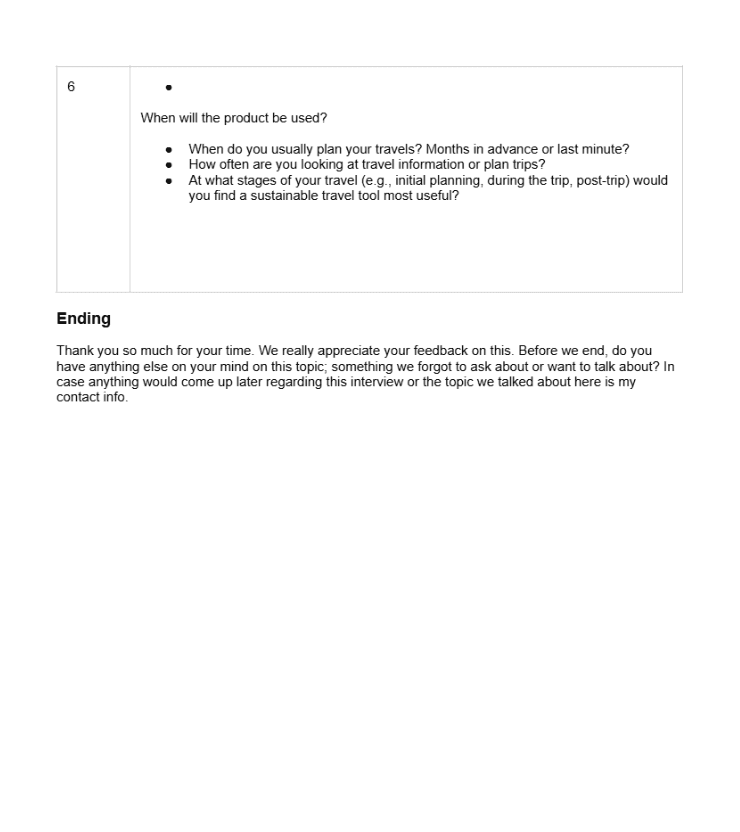
Where and when will the product be used?
Discovering the challenges
We wanted a mix of qualitative and quantitative data, so we chose to conduct both literary reviews and interviews. This helped us understand who are users are, and what they struggle with.
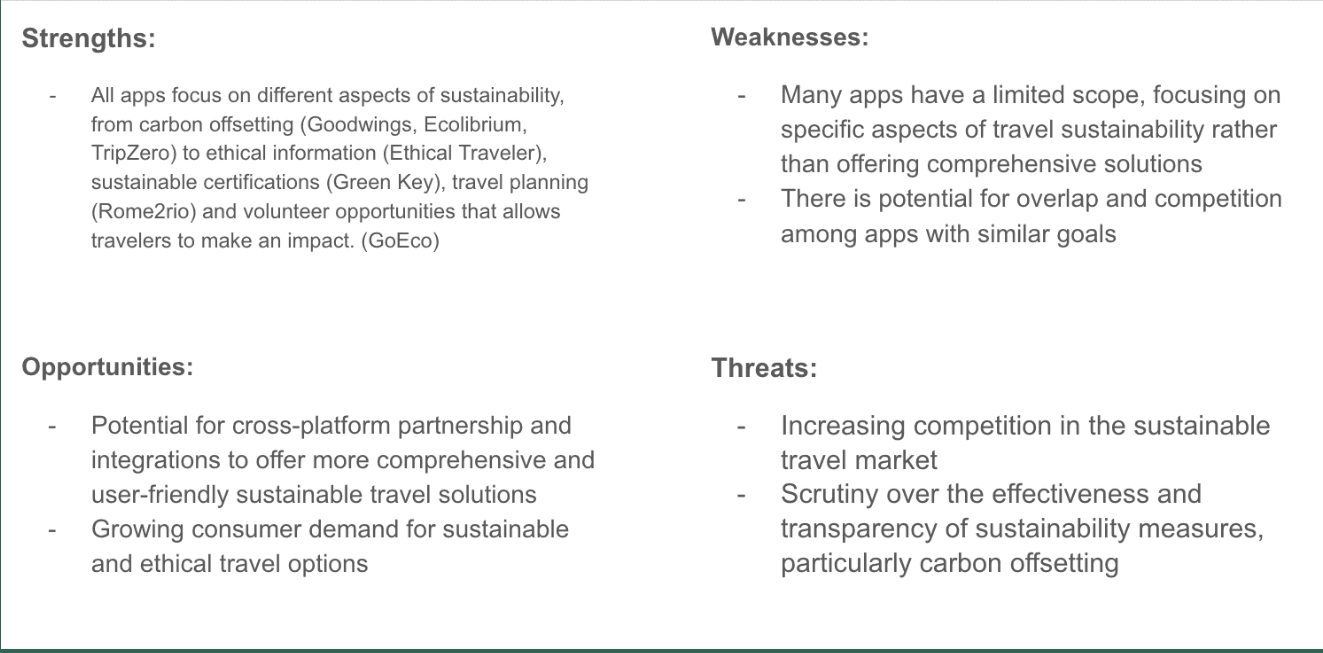
We also conducted a SWOT analysis to get a better understanding on how they face their challenges today.
Iterations
After conducting our research we decided to make the following iterations
Major:
Enlarge buttons. Better accessibility and reduced frustration.
Move login/signup later. Let users explore the app before committing, which increases trust.
Reposition “Review Trip”. Place it after travel completion, not during booking.
Clarify features. Points, quests, and transport choices need tooltips, microcopy, or onboarding.
Minor:
Add success messages. Users want confirmation that actions worked.
Enable booking extras. Extends usability to real-world scenarios.
Design choices
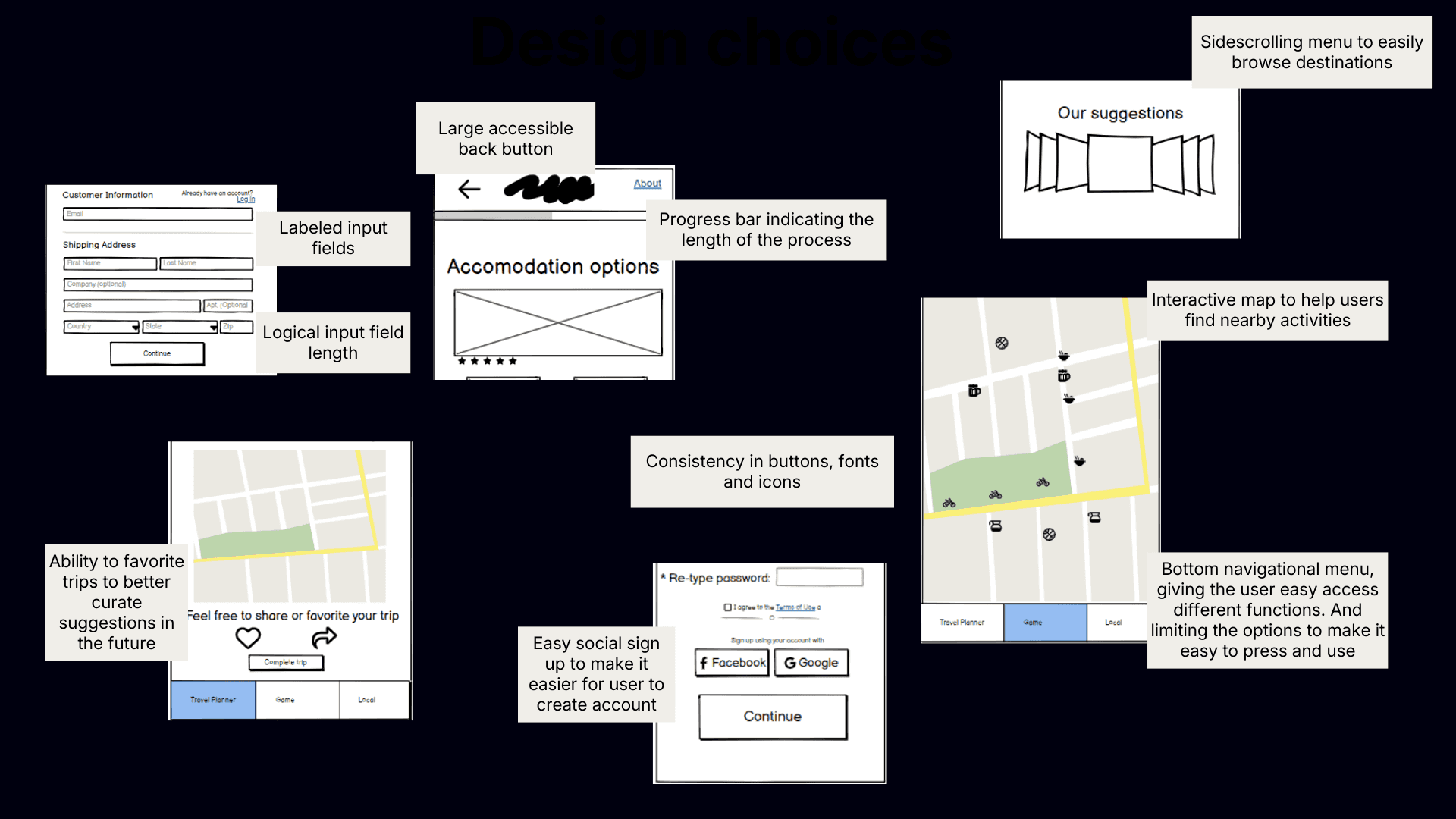
Visibility of System Status - Providing user with feedback on button presses, and other functions so that they know the action was successful.
Match between System and the Real World - We discovered that most travels are booked online and digitally, so we our designed is made to be familiar with existing booking experiences. We also use relatable and simple terms.
User Control and Freedom - Users can freely navigate using the bottom navigation bar, and back button. As well as large
Consistency and Standards - In order for our app to be easy to learn and use, we have stayed consistent internally in the app with buttons, fonts and icons. As well as externally and followed industry standards, and what users are familiar with.
Aesthetic and Minimalist Design - We have used a easy to understand, simple and modern design throughout our app. We have done this by reducing cludder, and a lot of whitespace. And with clear typography, large buttons and icons, and clear labels
My thoughts
What I was most pleased about was how clearly the research shaped the concept. We identified motivation, awareness, and organization as key challenges early on, and these insights directly influenced our focus on incentives, gamification, and clear information. Creating a detailed persona and scenario also helped ground the design in a realistic, everyday use case rather than an idealized user. The most important lesson for me was how motivation-driven design requires validation. Ideas like points, challenges, and sharing feels promising, but we based them on assumptions and secondary research and not testing. Next time, I would spend more time testing whether these features genuinely motivate long-term sustainable behavior rather than short-term engagement. Overall, this project strengthened my understanding of persuasive and behavioral design